

Navigating the New Era of Trade

Navigating the New Era of Trade
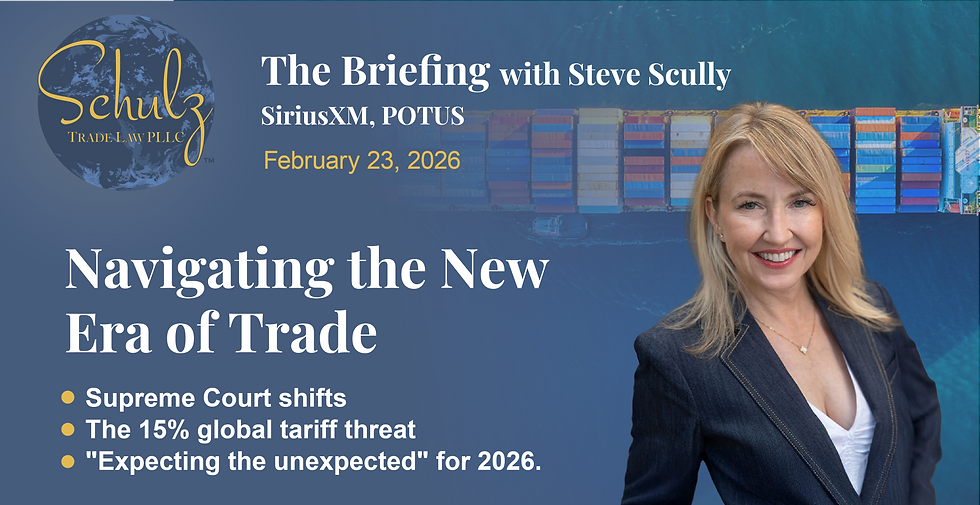
The Founder of Schulz Trade Law shares insights on Supreme Court shifts, the 15% global tariff threat, and why "expecting the unexpected" is the only strategy for 2026.
Overview
In the wake of landmark judicial rulings and a rapidly shifting executive approach to international trade, businesses are facing an unprecedented administrative burden. Michelle Schulz, Founder and Managing Partner of Schulz Trade Law PLLC, has spent over two decades guiding Fortune 500 companies through these exact types of regulatory storms. In this exclusive interview, Michelle breaks down the legal complexities of 2026, from the "major questions" doctrine to the tactical necessity of supply chain diversification.

The Judicial Shake-up and Tariff Refunds
The start of 2026 has been defined by the Supreme Court’s decision to strike down emergency tariffs, leaving billions of dollars in duties in limbo. For importers, the question isn’t just about future strategy—it’s about recovering what was already paid. Michelle emphasizes that while the legal victory is significant, the path to a refund is far from a straight line.
"The status of billions in duties remains in limbo. For many companies, the administrative burden of tracking and reclaiming these funds is extraordinary. To grow in a healthy way, leading companies are reevaluating the regulatory landscape and scaling up their compliance programs to meet these demands."
The Reality of "Trump II" and Global Tariffs
With the administration pivoting toward a 15% global import tax and citing new legal authorities, the cost of doing business is shifting overnight. Michelle highlights that these policies aren't just numbers on a balance sheet—they have a direct, compounding effect on everything from raw materials to consumer-facing prices.
"When you think about the staggering scale of these tariffs—sometimes reaching triple digits in specific sectors—the cost will inevitably be passed down. You have to expect the unexpected; any country with a trade surplus is now an area where the government may look to offset that imbalance."
Strategic Compliance in a Volatile Market
For Michelle, the solution isn't just reacting to news—it's building a resilient infrastructure. Whether it’s navigating the UFLPA, country-of-origin rules, or EAR/ITAR licensing, she advocates for a proactive "solution-focused" approach that treats compliance as a competitive advantage rather than a hurdle.
"There is going to be a transition period before new infrastructure is in place. Companies must adopt trade compliance programs that minimize legal risks while promoting growth. It’s about more than just checking boxes; it’s about strategic import and export decisions in real-time."

Don’t Navigate These Shifting Currents Alone.
With new tariffs being announced and judicial rulings changing the game, your business needs more than just legal advice—it needs a strategic partner.
Contact Schulz Trade Law to schedule a consultation and ensure your compliance program is ready for the challenges of 2026.
Trade on, but trade informed!
Subscribe to Schulz Trade Law for more updates.


Comments